
Running a Dougherty County Sex Offender Check
The Georgia Sex Offender Registry is the main public channel for a Dougherty County sex offender check. GBI and the Georgia Crime Information Center manage the statewide file. The Dougherty County sheriff registers local residents and sends changes to the state. Search by a known name when identity is the key question. Select Dougherty County or use city and ZIP controls when the goal is community awareness around a place.
The state search is broader than a list held at one local counter. It can show records submitted from every Georgia county, but it is still a changing public index. GBI says the registry updates daily, while sheriffs have two business days to submit changes. A searcher should record the date of the search, inspect the update field on a profile, and call the sheriff when a current local fact needs confirmation. Immediate danger should always go to emergency services.
Dougherty County Sheriff Registration Role
The Dougherty County Sheriff's Office is the local registration and reporting point. Its main office is at 225 Pine Avenue, Albany, Georgia 31701, and the published main number is 229-302-3600. Required registrants generally report in person within 72 hours after release, placement on supervision, entry into Georgia, or a relevant change. Annual renewal takes place in person within the 72 hours before the registrant's birthday and includes a new photograph and fingerprints.
This local role explains why a very recent move may not appear at once in a Dougherty County registry search. The sheriff collects and verifies local information; GBI publishes the state record. A suspected missed update or noncompliant status should be reported to the sheriff with the facts that prompted the concern. Do not confront the person or household. The office, not a private searcher, can compare the public display with nonpublic registration records and take lawful action.
Dougherty County Sheriff's Office
225 Pine Avenue
Albany, GA 31701
229-302-3600
Local registration, update reporting, and compliance concerns.
Searching Dougherty County Registry Records
Begin at the official state interface and use the narrowest reliable facts. A spelling error can hide a correct record, while a broad place search may return several profiles. The result list is a starting point, not proof that two people with similar names are the same person. Compare aliases, photographs, physical details, offense jurisdiction, and update dates before treating a profile as a match.
- Open the official Georgia registry search and read its use and accuracy notices.
- Enter a first or last name, or choose Dougherty County and add city or ZIP details.
- Review the result list and compare enough identifiers to avoid a name-only match.
- Open the full profile, check registration status and last update, then verify a current concern with the sheriff.
| Field or Control | Type | Required | Use |
|---|---|---|---|
| First and last name | Text | Optional | Search a known name; test accurate spelling and aliases. |
| County | Dropdown | Optional | Select Dougherty for a county-wide result set. |
| City or ZIP | Text | Optional | Narrow results to a stated place. |
| Address and radius | Address and distance | Optional | Confirm current options on the live form before relying on a radius. |
| Type or status | Filter | Optional | Use only when the live interface displays the filter. |
| Search or Reset | Button | Not applicable | Submit the query or clear all fields. |
The official registry interface shows the source used for these fields.
The search screen is the best place to confirm which geographic and status controls are available on the day of a Dougherty County search.
Dougherty County Registry Update Timing
Timing matters when reading a Dougherty County registry result. The public file is updated daily, but a sheriff may submit a change within two business days. A move, supervision change, new photograph, or verification may therefore pass through a short reporting sequence before the public profile changes. A no-result on one day should not be treated as a permanent answer when the underlying event is new.
The GBI registry questions and answers explain registration, updates, classifications, and reasons a record may not appear.
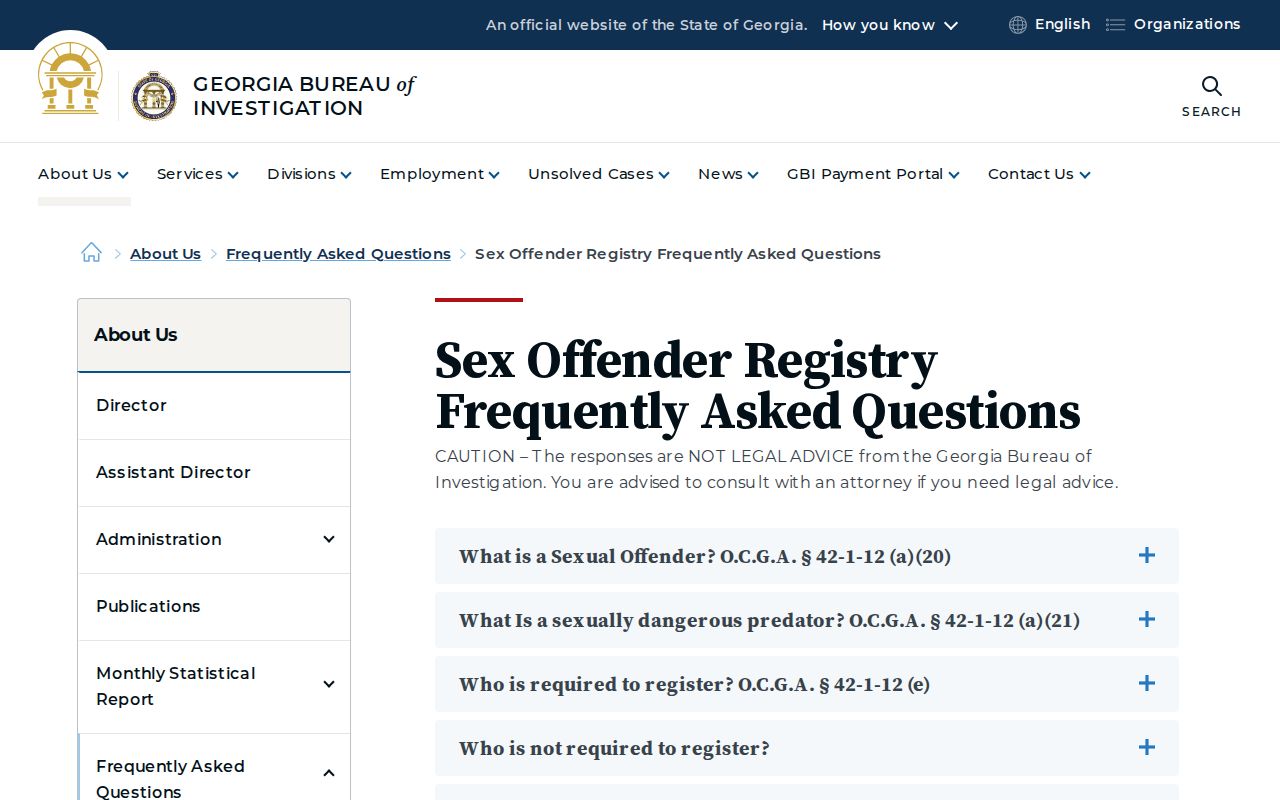
That guidance supports a careful check of both the profile date and the local sheriff's current information.
Note: A delayed public update is not by itself proof that a registrant broke a reporting rule.
What a Dougherty County Registry Profile Shows
A public profile groups identity, residence, offense, and registration facts that Georgia law permits GBI to display. It may show both current and prior photographs, aliases, physical marks, vehicles, work or school information, and supervision details. The exact set can differ by profile. Read the offense description with its conviction jurisdiction and date. A listed offense is not a claim that a new crime occurred in Dougherty County.
| Name and Aliases | Published name forms used to identify the registrant. |
|---|---|
| Photo and Description | Current or prior photograph, sex, race, age or birth data, and physical traits. |
| Residence | Address or residence status and the registering county. |
| Offense | Description, statute, conviction date, and jurisdiction. |
| Risk Classification | Level I, Level II, or sexually dangerous predator when assigned. |
| Registration Status | Compliance, verification, and last-update information when published. |
| Other Published Facts | Scars, marks, tattoos, vehicles, work, school, or supervision data when displayed. |
Profile data can be incomplete or out of date, so identity and present location should be verified through law enforcement when safety depends on the answer.
When Dougherty County Searches Find Nothing
A blank result has several possible meanings. The offense may not require Georgia registration. New information may not yet have reached the public system. The person may have completed qualifying First Offender treatment, died, moved, or been removed under a lawful process. Juveniles generally do not register unless tried and convicted as adults. Wrong spelling, an old address, or an incorrect city filter can also hide a record.
Run the name again with fewer place limits and check aliases when known. Then use the U.S. Department of Justice National Sex Offender Public Website if another state may be involved. NSOPW searches participating jurisdictions across state lines, while the Georgia registry supplies the deeper Georgia profile. Neither source turns a lack of results into a guarantee about a person's past.
Dougherty County Registration Levels
Georgia does not use a simple public table of federal-style 10-year, 25-year, and lifetime tiers. The Sexual Offender Registration Review Board assigns a risk classification under O.C.G.A. § 42-1-14. Registration is generally for life unless a person qualifies for and obtains judicial release under O.C.G.A. § 42-1-19. Risk level and registration duration are therefore separate ideas.
| Georgia Classification | Meaning | Duration and Verification |
|---|---|---|
| Level I | Board-assigned lower risk classification. | Generally lifetime registration; annual in-person birthday renewal applies. |
| Level II | Board-assigned higher risk classification. | Generally lifetime registration; annual in-person birthday renewal applies. |
| Sexually dangerous predator | Board classification with the state's highest stated risk designation. | Generally lifetime registration; added legal duties may apply. |
The official Georgia risk-classification text is the source for these three labels.
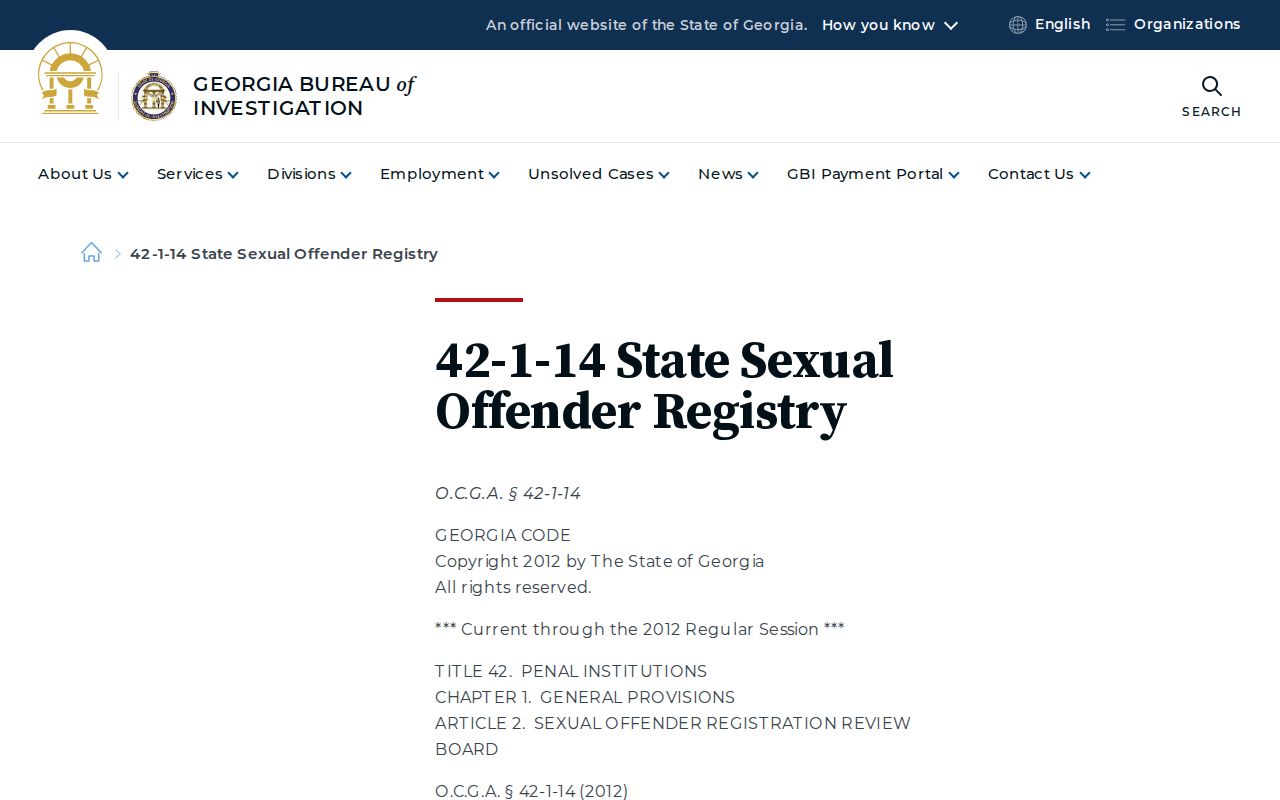
The statutory scheme shows why a generic federal tier chart would misstate the rules applied to Dougherty County registrants.
Dougherty County and Cross-State Checks
The Georgia registry is the first source for a person who lives or registers in Dougherty County. NSOPW adds a national layer when a person may have moved across a state line or when a conviction came from another jurisdiction. Use both systems for their stated purpose. The national search gathers records from participating jurisdictions, but the source jurisdiction remains the place to read the most current profile and status.
A cross-state match needs the same care as a Georgia result. Compare photographs, aliases, physical traits, offense jurisdiction, and location. Do not rely on one shared name. If a profile suggests a present Dougherty County address but the Georgia display differs, give the discrepancy to the sheriff. Law enforcement can determine whether the difference reflects timing, a lawful status, or noncompliance.
The official NSOPW search provides the national layer described here.
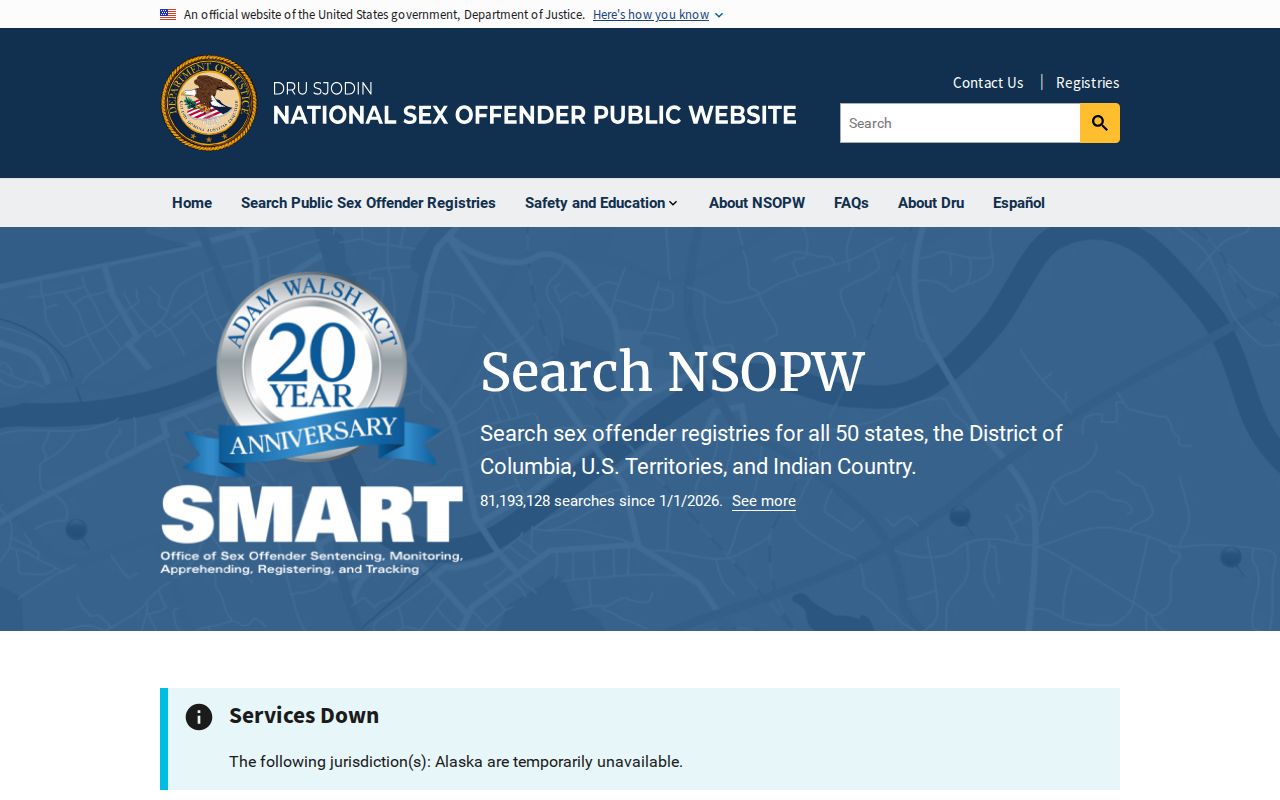
The federal search routes a reader back to participating jurisdiction records for the profile details and updates that control.
Report Dougherty County Registry Concerns
A profile marked noncompliant, an address conflict, or a suspected missed update calls for a report, not private investigation. Write down the profile name, the public status, the search date, and the specific conflict observed. Give those facts to the Dougherty County Sheriff's Office at 229-302-3600. If the concern involves immediate danger, use emergency services. This keeps any response with officers who can check protected registration records and current field information.
Do not post an unverified claim or approach a listed home. A public profile can lag, and a missing profile can have a lawful explanation. The sheriff can determine whether the state display is awaiting an update, whether the person has a different reporting status, or whether enforcement is required. For an interface error rather than a local compliance issue, use the contact path on the GBI registry page and identify the exact query that produced the problem.
Lawful Use and Dougherty County Notification
Registry information supports personal, family, and neighborhood safety planning. It should be read as a public notice tied to a specific statutory registration duty. It does not authorize surveillance, contact, punishment, or assumptions about conduct not stated in the record. GBI also warns that it cannot guarantee every public entry is complete or accurate. Verify a material concern with the sheriff.
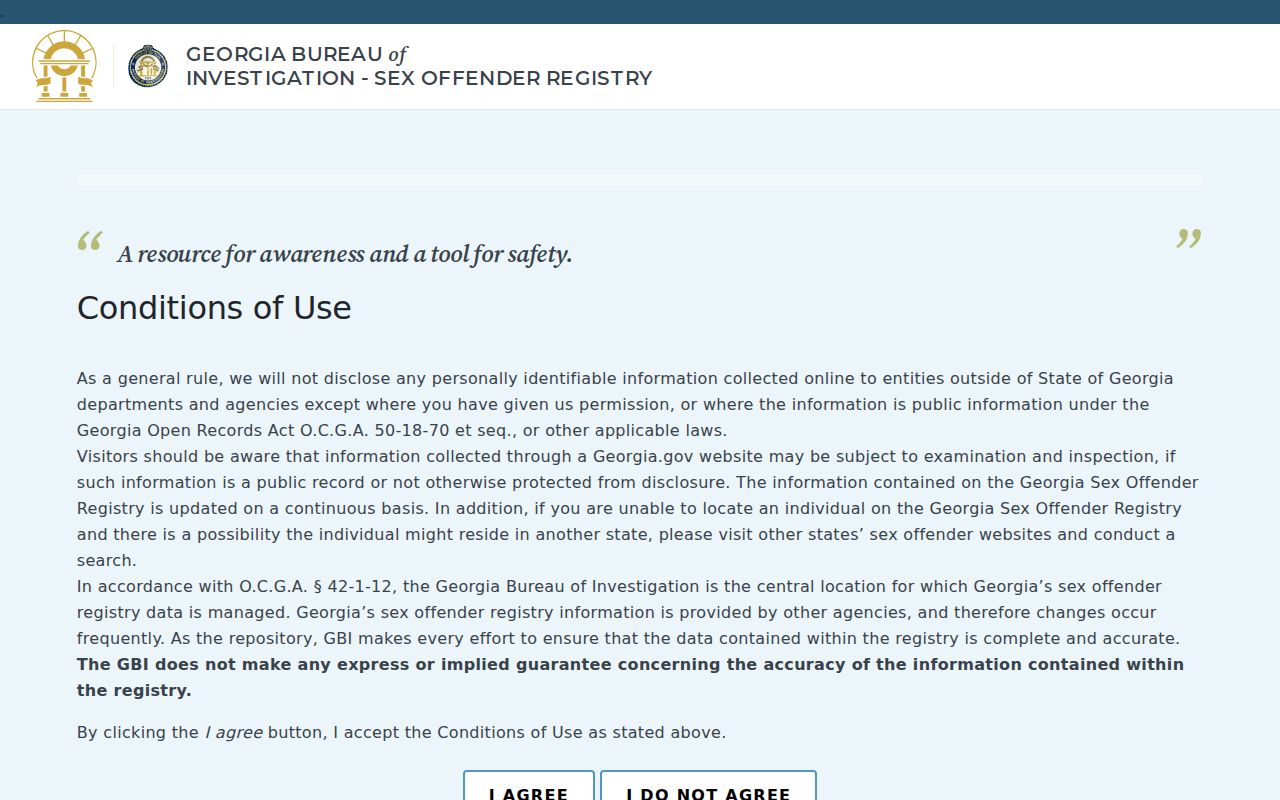
The GBI registry landing page explains the official public-access purpose and data limits.
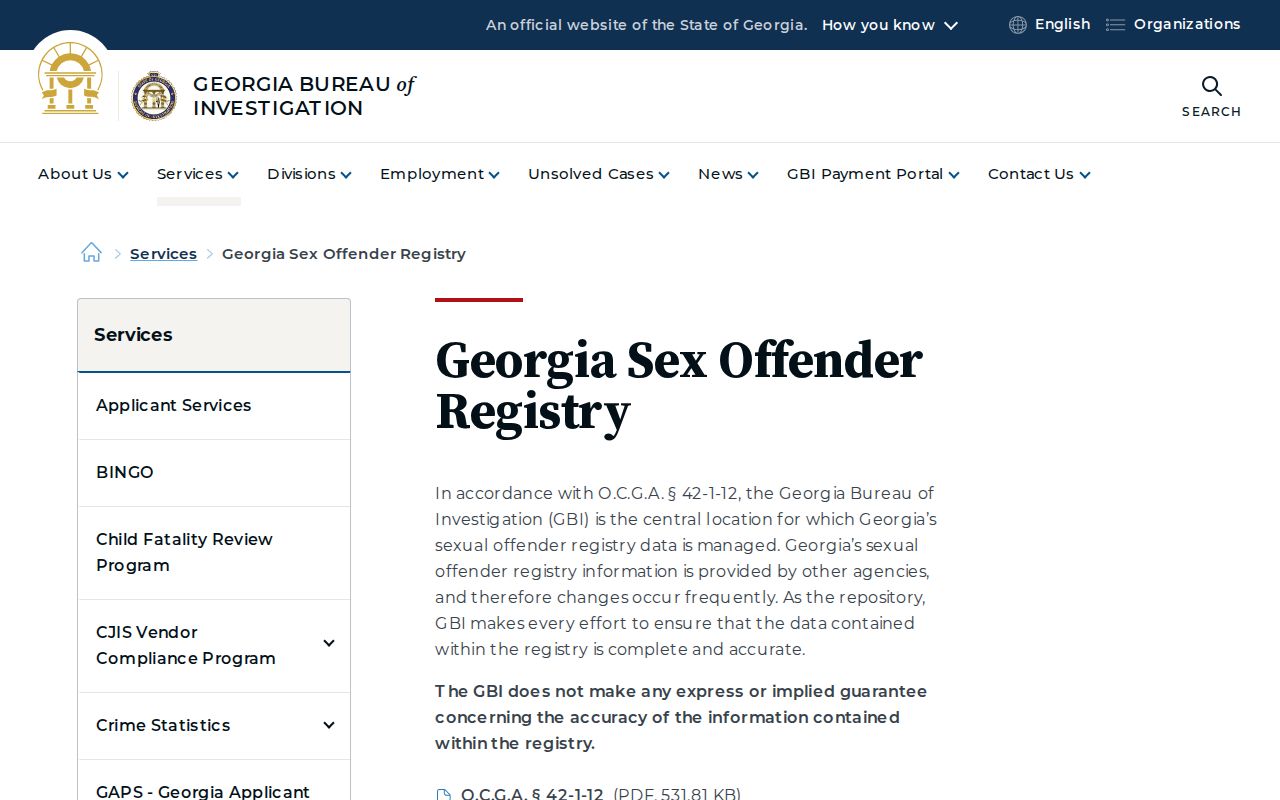
The state notice keeps community awareness tied to current official information and lawful reporting channels.
Misuse is a crime: O.C.G.A. § 42-1-12 warns that using registry information to commit a criminal act against a registrant, or engaging in harassment or threats, is prohibited. Report suspected noncompliance to law enforcement and do not confront anyone.